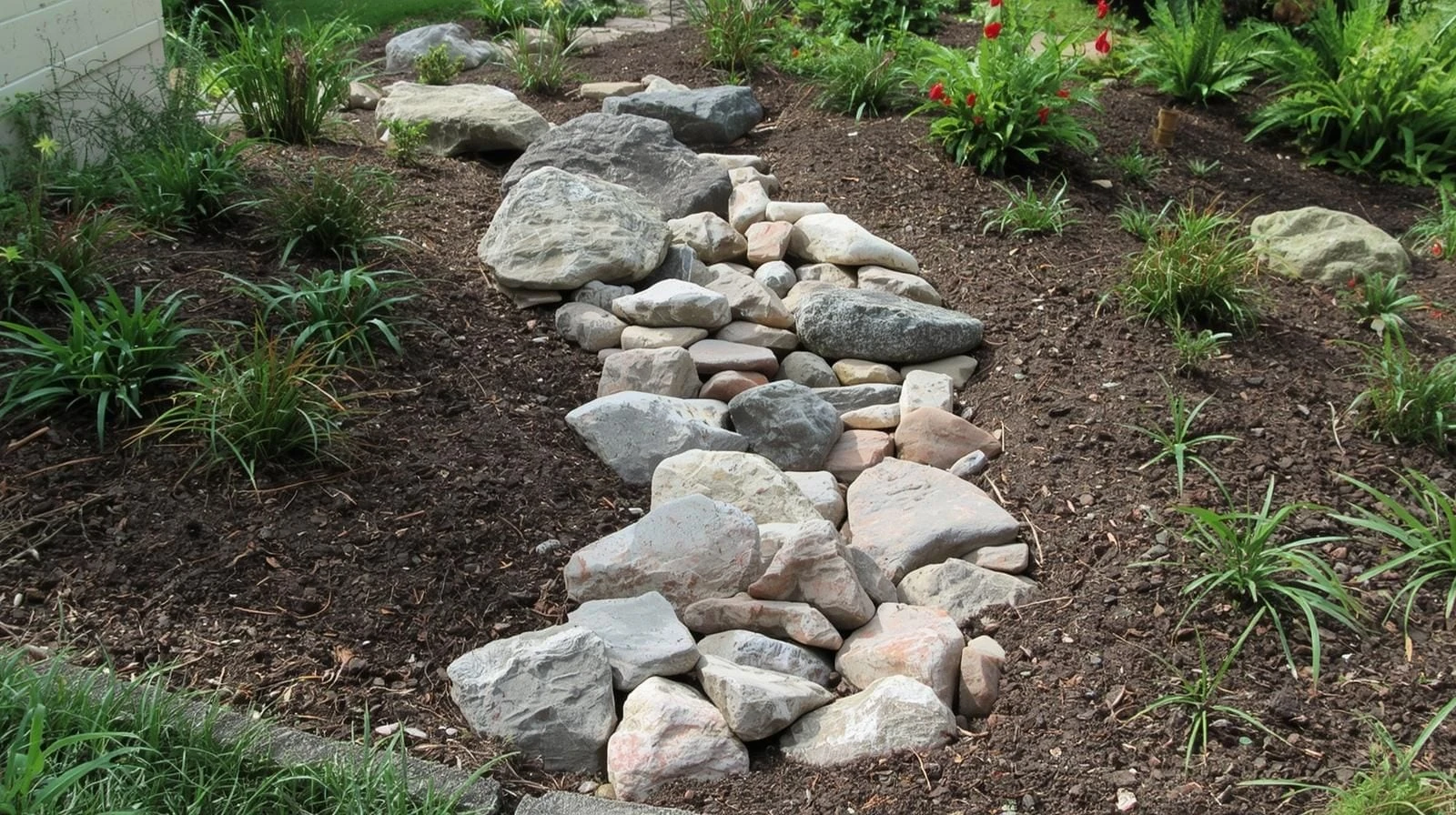
Dry Creek Beds That Never Carry Storm Flow
A dry creek bed can look finished the day stone is placed while still failing the first hard rain. In Denver metro clay, the issue is often hydraulic capacity and connection to inlets, not rock color or boulder count.
Property managers and homeowners may expect a creek channel to replace grading work. When flow never reaches the outlet, water still pools in beds or against foundations while the stone channel stays mostly dry.
Design intent versus storm performance
Dry creeks serve two roles: moving concentrated runoff and reading as a landscape feature. When aesthetics lead, slope may flatten in visible bends where velocity drops and sediment deposits.
A channel that cannot carry the ten year storm peak for its tributary area will overtop into mulch regardless of edge restraint. Capacity math belongs in the plan even when the feature is called dry.
Uncertainty remains when roof area, drive pitch, and lawn sheet flow all feed one inlet without measurement. A walk during rain still reveals more than static photos.
Inlets, outlets, and daylighting
Runoff must enter the bed at an elevation that prevents back flooding into planting areas. Common mistakes include lip heights that dam sheet flow until soil saturates.
Outlets need daylight or tie in to storm sewer, swale, or dry well with known infiltration limits on clay. A beautiful terminal boulder pile without lower outlet is often a pond edge in disguise.
Check valves and grate details on adjacent drains can steal flow before it reaches the creek line. Trace the path from gutter to exit before assuming the channel is the weak link.
Subgrade and liner behavior
Some installations use fabric or thin liners to reduce weed growth. Liners without perforation or with poor overlap can trap water under stone and slow lateral movement.
Compacted clay subgrade with insufficient base rock creates perching. Water moves along the interface and bleeds out the sides instead of following the visible channel.
Freeze thaw on saturated subgrade can shift stone veneers while the hydraulic path stays broken. Spring visits should note settlement ribbons along the centerline.
Slope, velocity, and meander layout
Minimum slope to maintain flow in rounded cobble depends on size gradation and debris load from cottonwood litter or roof grit. Flat meanders invite deposition that blocks the next storm.
Steep drops without energy dissipation erode underlayment and undercut edges. Step pools or larger anchor stone may be required even on residential scales.
Mixed sun and shade along the channel changes evaporation and soil moisture at banks. That does not replace slope but can change how long water stays in low spots after flow stops.
Vegetation and maintenance expectations
Plants placed inside the low flow path catch sediment and slow water. That may be acceptable for minor rains but not for design storms without periodic sediment removal.
Irrigation overspray that keeps bank soil soft allows edge collapse into the channel, narrowing effective width over time.
Annual inspection after hail season should include clearing debris, verifying inlet grade, and photographing bank erosion points before winter freeze.
When to modify or regrade
Cosmetic relaying of the same stone on the same subgrade rarely fixes hydraulic failure. Regrade to restore continuous fall often disturbs adjacent lawn or hardscape.
Connecting the bed to a French drain or catch basin may be a tradeoff between visible stone length and reliable performance on tight suburban lots.
A site specific plan should state design storm target, measured tributary area, and outlet type so performance expectations stay accurate for Denver clay conditions.
Front Range freeze thaw cycles, afternoon hail, and clay subgrade change how the same material behaves year to year on Denver metro lots. Document grade, drainage outlets, and moisture probes before you label a symptom as product failure alone.
Front Range freeze thaw cycles, afternoon hail, and clay subgrade change how the same material behaves year to year on Denver metro lots. Document grade, drainage outlets, and moisture probes before you label a symptom as product failure alone.
Front Range freeze thaw cycles, afternoon hail, and clay subgrade change how the same material behaves year to year on Denver metro lots. Document grade, drainage outlets, and moisture probes before you label a symptom as product failure alone.
- Disclaimer: This article is for general informational purposes only. It is not professional advice, a quote, or a service agreement. Conditions at your home or property may differ; contact a qualified professional for an on-site evaluation before making repair, safety, or spending decisions.
Disclaimer: This article is for general informational purposes only. It is not professional advice, a quote, or a service agreement. Conditions at your home or property may differ; contact a qualified professional for an on-site evaluation before making repair, safety, or spending decisions.