Artificial turf can solve a specific property problem. A narrow side yard may never receive enough sun for dependable grass. A small dog area may receive concentrated wear. A courtyard may need a durable green surface without a mower route. Stone steppers may look more finished when surrounded by a consistent material. That does not make the entire yard artificial.
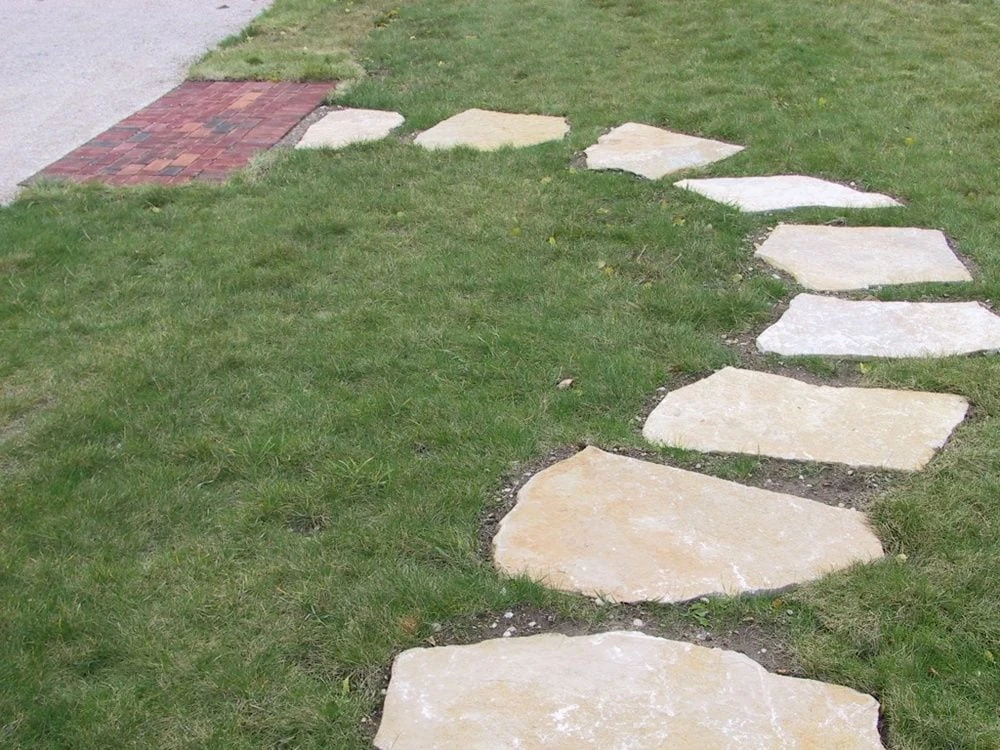
Weston Landscape & Design installs artificial turf within a much larger outdoor service menu that includes landscape design, living lawn care, irrigation, trees, planting, hardscape, lighting, and seasonal maintenance. We also show artificial turf integrated with natural stone stepping paths rather than presented only as a wall to wall lawn replacement. The strongest plan treats artificial turf as one zone inside the property.
Begin with the area that repeatedly fails
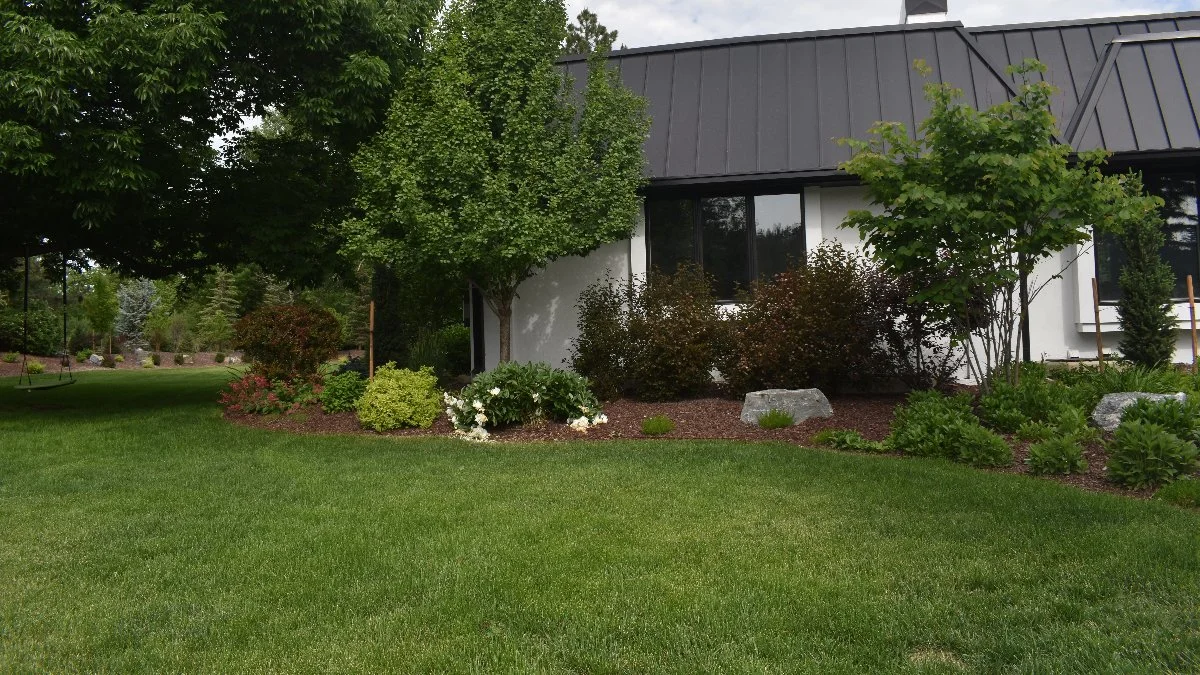
Do not choose the installation area solely by drawing a rectangle around the current lawn. Ask why the living turf is difficult there. Deep shade, pet traffic, narrow access, compacted soil, repeated foot traffic, an irrigation gap, poor drainage, reflected heat, snow storage, play equipment, furniture, a steep grade, awkward mower access, or construction disturbance can all create a problem zone. Artificial turf may fit some of those conditions. It will not correct a buried drainage failure or unstable soil without appropriate site preparation. We should evaluate the source of the problem before designing the replacement surface.
Keep successful living lawn where it has a job
Living turf may still be the right surface for a large play area, open entertaining, cooling around the house, an existing irrigation zone, established lawn, a broad visual transition, an area receiving suitable sun, or space that recovers normally. Artificial turf does not have to replace every green surface to be useful. A mixed plan may include artificial turf in a narrow side yard, living lawn in the main backyard, planting beneath trees, stone or pavers around outdoor rooms, gravel or mulch in utility areas, natural paths, and garden beds. Because we install both artificial turf and full lawn services, those surfaces can be evaluated together instead of sold as an either or decision.
Drainage still matters beneath a manufactured surface
Artificial turf allows water to pass through according to the selected system and installation. The water still enters the ground or drainage assembly beneath it. The design should account for existing grade, low points, roof runoff, irrigation runoff, neighboring water, clay soil, base material, edge conditions, patio drainage, snowmelt, downspouts, pet cleaning water, and the final outlet. A green surface can hide a water problem from view. It cannot make trapped water disappear. Ask us to explain how the base and drainage relate to the surrounding landscape, including any yard drainage work the site may need.
Existing irrigation should be redesigned, not forgotten
Removing living grass from one section may make part of an irrigation zone unnecessary. The same zone may also serve shrubs, trees, or lawn that remain. Before installation, map heads inside the new turf area, heads spraying across it, pipes beneath it, valves, drip lines, remaining lawn, planting beds, trees, the controller schedule, and future repair access. We offer irrigation installation, repairs, startups, midseason checks, and winterization. The project should identify which heads are removed, capped, moved, or retained. Do not leave a hidden active head beneath artificial turf.
Trees need soil, water, and room around the trunk
An artificial surface may be planned near an established tree. The design should account for the root flare, expanding trunk, surface roots, water, soil air exchange, mulch or planting area, future tree work, leaf drop, shade, branch pruning, and root zone disturbance. We provide tree trimming, removals, and plant health services alongside outdoor construction. The tree should not be boxed into a small opening simply to maximize artificial coverage. Ask the tree or plant health team to review important mature specimens before base excavation begins.
Pet areas need an operating plan
Artificial turf may be selected for a dog run or heavily used pet area. Discuss the number and size of pets, drainage, cleaning, waste removal, shade, surface temperature, water access, edge security, digging, odor management, gate location, the route into the house, and snow and ice. The proposal should explain the selected turf and base system for the intended use. A decorative low traffic courtyard and a daily multi dog area should not automatically receive the same design.
Stone steppers change the installation detail
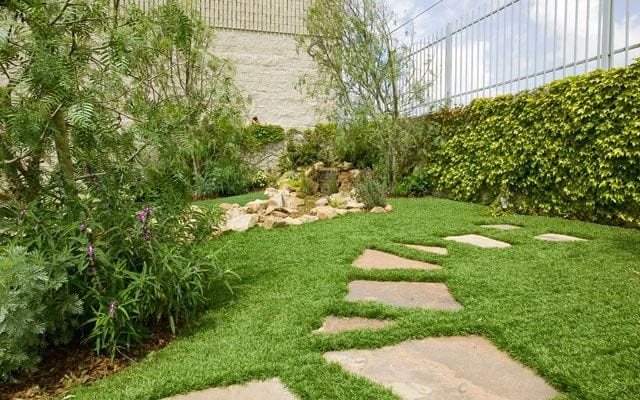
We specifically show artificial turf integrated with natural stone stepping paths. That design can create an attractive transition when the stone placement is planned around actual walking patterns. Before installation, mark the normal stride, gate, door, grill, patio, trash route, garden, pet route, irrigation access, and outdoor equipment. Steppers chosen for appearance but placed outside the true walking line may leave people stepping on turf between them every day. Mock up the route before the base is complete.
Snow storage should remain on the plan
Denver properties need a winter map. Artificial turf may sit beside a driveway, front walk, patio, plow route, roof discharge, downspout, shaded north side, or outdoor steps. Tell us where snow is normally placed. The selected surface and edges should not become the default storage area for dirty plowed snow, gravel, deicing material, and debris without discussion. You should also know how to remove snow when access through the area is needed, and how that fits with any snow service already on the property.
Artificial turf still needs maintenance
It does not need ordinary mowing, fertilization, or overseeding. It may still need debris removal, leaf cleanup, brushing, pet cleanup, weed observation at edges, inspection after storms, edge repair, infill care where applicable, cleaning, drainage review, snow related cleanup, and repair after another contractor works nearby. Ask what care belongs to the homeowner and what can be included in a maintenance plan. We offer residential and commercial landscape maintenance in addition to installation.
Keep underground records before the surface closes
Save excavation photographs, base depth, drainage notes, irrigation changes, utility locations, tree root areas, edge construction, stepping stone locations, turf product, infill, seams, warranty, and care instructions. Future contractors should know what lies below the surface before installing a fence, light, irrigation pipe, or another feature.
Browse more project guidance on the Weston blog, or start from the full services menu. We serve Denver, Englewood, Cherry Hills Village, Greenwood Village, Littleton, Centennial, Highlands Ranch, Lakewood, Arvada, Wheat Ridge, and other Denver metro communities. Reach us through the contact page or at (303) 944-7495.