If your yard starts looking tired by late July, your watering bill climbs, and the grass along the driveway still turns crispy, the problem usually is not effort. It is design. Drought tolerant landscaping is simply a yard planned to stay attractive and usable with less water, not no water, and in Greater Denver that difference matters more than most people realize.
What drought-tolerant landscaping really means in denver
Denver yards deal with a specific kind of stress. Intense sun, dry air, clay-heavy soil, wind, and fast weather swings can push plants hard, sometimes all in the same week. A low-water landscape that works here has to do more than survive on paper. It has to handle a hot afternoon in Lakewood, a surprise downpour, and a chilly night without falling apart.
That is why drought tolerant landscaping is not about stripping a yard down to bare rock. It is about making smarter choices so your landscape holds moisture better, asks for less from your irrigation system, and still looks like a place you want to spend time.
Drought tolerant vs. xeriscaping vs. zero-scape
These terms get mixed together all the time. Drought tolerant landscaping usually means choosing plants, materials, and layout decisions that reduce water use while keeping the yard welcoming and finished. Xeriscaping is the bigger design approach behind that idea, focused on water-wise planning from soil to irrigation.
“Zero-scape” is the version people worry about: endless gravel, a few lonely boulders, and heat bouncing back at you from every direction. That look misses the point. A good drought-tolerant yard can still feel green, layered, and soft.
Why this works so well along the front range
Along the Front Range, low-water design lines up with how the climate already behaves. Plants that fit the region stay under less stress during hot spells, lawns take up less of your weekend, and irrigation has a better chance of keeping up without waste.
That is especially useful in places like Denver, Highlands Ranch, and Littleton, where sunny exposures and reflected heat from pavement can dry out problem areas fast. When the yard matches the climate, maintenance gets easier. Simple as that.
Start with the parts of your yard that waste the most water
The fastest wins usually come from fixing the obvious waste first, not redoing the whole property. A side strip that never fills in, a slope that sheds water, or a giant lawn nobody uses can quietly drain your budget month after month.
Start by noticing where you water the most and enjoy the least. Those spots usually tell you exactly where to begin.
Shrink the thirsty lawn
Oversized turf is often the biggest water user in the yard. If you have grass covering wide open areas that nobody sits on, walks on, or plays on, that space is working hard for no real reason.
Grass still makes sense in a dog run, a play zone, or a small open patch near a patio. But a narrow front lawn baking in full afternoon sun is often just expensive groundcover. Reducing that footprint is one of the most effective changes you can make.
Rethink narrow strips and hard-to-water spots
The awkward spots are usually the smartest places to convert. Parking strips, side yards, slopes, and edges near driveways often get too much heat and not enough even coverage from sprinklers.
Those areas do better with gravel, low-water plantings, or spreading groundcovers that can handle tougher conditions. Instead of forcing lawn to survive there, give that space a job it can actually do.
Fix runoff before you buy more plants
Here’s the thing: if water races off the yard every time it rains, more plants will not fix the problem. Grading, mulch, and simple drainage improvements help water soak in instead of disappearing down the slope.
That matters in Denver because a summer storm can hit hard for twenty minutes, then vanish. If your landscape cannot hold onto that moisture, you miss one of the best free water sources you get all season.
Drought-tolerant landscaping ideas that actually work
Once the waste is under control, the design choices start to matter more. This is where your yard stops feeling like a compromise and starts feeling intentional.
Swap big blank lawn areas for planting beds
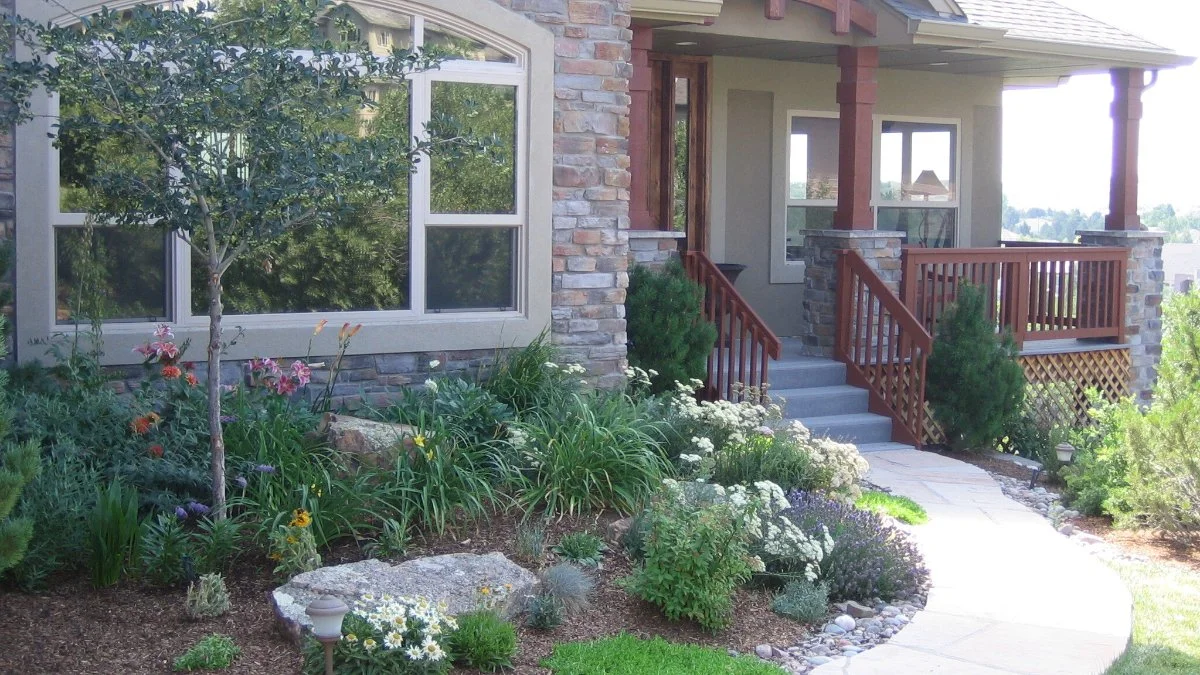
Converting sections of turf into planting beds instantly cuts water use and gives the yard more shape. A bed with shrubs, grasses, and flowering perennials usually looks fuller and more finished than a flat rectangle of grass.
It also lets you add color where it actually shows. Near the front walk, around an entry, or beside a patio usually gives you more visual payoff than keeping every square foot green.
Use rock, gravel, and boulders with purpose
Stone works well in Denver landscapes, but only when it is balanced. Decorative gravel helps with drainage, reduces muddy spots, and lowers maintenance in tough areas. Boulders can anchor a bed and make a slope feel intentional instead of awkward.
The catch is using too much. If every open space becomes rock, the yard can start to feel like a parking lot in August. Stone should support plants, not replace them.
Choose hardscaping that earns its space
Patios, walkways, edging, retaining walls, and seating areas can all reduce irrigation demand while making the yard more useful. A patio that gets used three nights a week is better value than a patch of lawn you mow and ignore.
Hardscape also helps define the layout. Paths guide movement, walls solve grade changes, and clean edging keeps planting beds from feeling messy.
Group plants by water needs
Hydrozoning sounds technical, but the idea is simple: keep plants with similar watering needs together. Shrubs and perennials that like the same moisture level should share a zone.
That makes irrigation easier to manage and avoids the usual problem where one plant stays soggy while another dries out. Behind the scenes, this is one of the smartest choices in any drought-tolerant design.
Try a dry creek bed or smart drainage feature
A dry creek bed can do two jobs at once. It catches runoff and moves it through the yard while adding texture and shape to the landscape.
Used well, it looks like part of the plan, not a last-minute fix. That is a good trade, especially in low spots or along downspout paths.
Pick plants that can handle Denver’s dry climate
The right plant in the right place beats a trendy plant list every time. Denver rewards tough, adapted choices.
Drought-tolerant perennials for long-season color
If you want color without constant watering, start with dependable perennials like salvia, yarrow, catmint, penstemon, and blanket flower. These handle heat well and keep the yard lively through the season.
Ornamental grasses that add movement and texture
Ornamental grasses soften the look of stone and hardscape. They also add motion, structure, and winter interest, which helps the yard look good beyond peak bloom season.
Shrubs that hold the yard together
Shrubs do the quiet work. Juniper, potentilla, rabbitbrush, and other adapted shrubs give the landscape backbone and make everything else look more settled.
Trees and shade for long-term water savings
A well-placed tree can lower heat stress around patios, foundations, and planting beds. That shade improves comfort and can reduce water demand over time, especially on hot west-facing exposures.
Groundcovers and mulch that reduce evaporation
Bare soil dries out fast. Groundcovers and mulch help hold moisture, suppress weeds, and reduce that patchy, half-finished look that shows up in struggling yards.
Water smarter, not more
Even the best drought tolerant landscaping will struggle with bad watering. If irrigation is sloppy, the rest of the design has to fight uphill.
Upgrade spray zones and overspray issues
Traditional spray heads often waste water on sidewalks, fences, and windy corners. Adjusting zones or changing how those areas are watered can tighten up performance right away.
Use drip irrigation where it makes sense
Drip irrigation means water delivered slowly at the root zone instead of sprayed across everything. It works especially well in planting beds with shrubs, grasses, and perennials because it targets the plants that need the water.
Water deeply and less often
Deep, less frequent watering encourages roots to grow down where moisture lasts longer. Shallow daily watering does the opposite. It trains plants to depend on constant surface moisture, which is exactly why they struggle during heat.
Design tips that keep a low-water yard looking good
Saving water matters, but looks still count. A smart layout keeps the yard from feeling sparse or unfinished.
Layer heights, color, and bloom times
Mixing trees, shrubs, grasses, and perennials creates depth. It also keeps something happening through more of the season, even when one plant finishes blooming.
Leave room for outdoor living
A drought-tolerant yard should still work for real life. Patios, fire pit spaces, walkways, and seating areas fit naturally into a low-water design and often make the landscape more enjoyable than extra turf ever did.
Avoid the “all rock, no shade” mistake
Too much exposed stone in full Denver sun can feel harsh fast. Plants soften edges, trees add relief, and even a few layered beds can keep the yard from looking hot and empty.
Common mistakes to avoid before you start
A few mistakes cause most of the expensive do-overs. Avoid those, and the whole project gets easier.
Planting without checking sun, soil, and drainage
Full sun, reflected heat, and clay soil change what succeeds. A plant that looks great in one corner can fail badly ten feet away if drainage or sun exposure shifts.
Installing drought-tolerant plants, then watering like a lawn
Low-water plants still need regular water while getting established. After that, the schedule should change. If you keep watering them like turf, roots stay shallow and performance drops.
Doing too much at once
The smartest approach is often phased. Start with one problem area, like a front bed or a side strip that never looks right, then build from there. Try one strong change first, and your whole yard gets easier to plan.
- Disclaimer: This article is for general informational purposes only. It is not professional advice, a quote, or a service agreement. Conditions at your home or property may differ; contact a qualified professional for an on-site evaluation before making repair, safety, or spending decisions.
Disclaimer: This article is for general informational purposes only. It is not professional advice, a quote, or a service agreement. Conditions at your home or property may differ; contact a qualified professional for an on-site evaluation before making repair, safety, or spending decisions.