Your lawn and beds cannot thrive on rainfall alone in the Denver area. When soil thaws and grass breaks dormancy, an automatic system that was winterized in the fall has to come back online carefully. Rush it before a hard freeze and you risk cracked components; wait too long and dry spots show up just as fertilizer and growth kick in.
This spring guide is based on how Weston Landscape & Design delivers irrigation startups and how that service connects to the rest of our lawn fertilization and mowing work. Use it to plan your season, then call (303) 944-7495 when you want us on the clock.
Why startups are not only “turning the water on”
A startup is a structured check-in after months of empty lines and idle heads. We bring the supply on slowly, watch for leaks that developed from freeze damage or age, and run each zone so misaligned or clogged heads do not silently drought-stress one side of the yard. That matches the process outlined on our irrigation page: supply on, leak inspection, zone-by-zone testing, and clear notes if repairs are needed.
Many homeowners in Englewood, Greenwood Village, and Arvada discover one stuck valve or a cracked lateral only when the system is under pressure exactly why we do not treat startup as flipping a single switch.
Timing startups with Colorado weather
Local night freezes can linger into April. Above-ground plumbing and sensitive components need the same patience we recommend in our watering articles: plan startup when hard freezes are unlikely for your area of your yard, and lean on a pro if you are unsure whether your backflow or manifold is safe to charge. If you start too early and damage occurs, repairs become the priority instead of fine-tuning coverage.
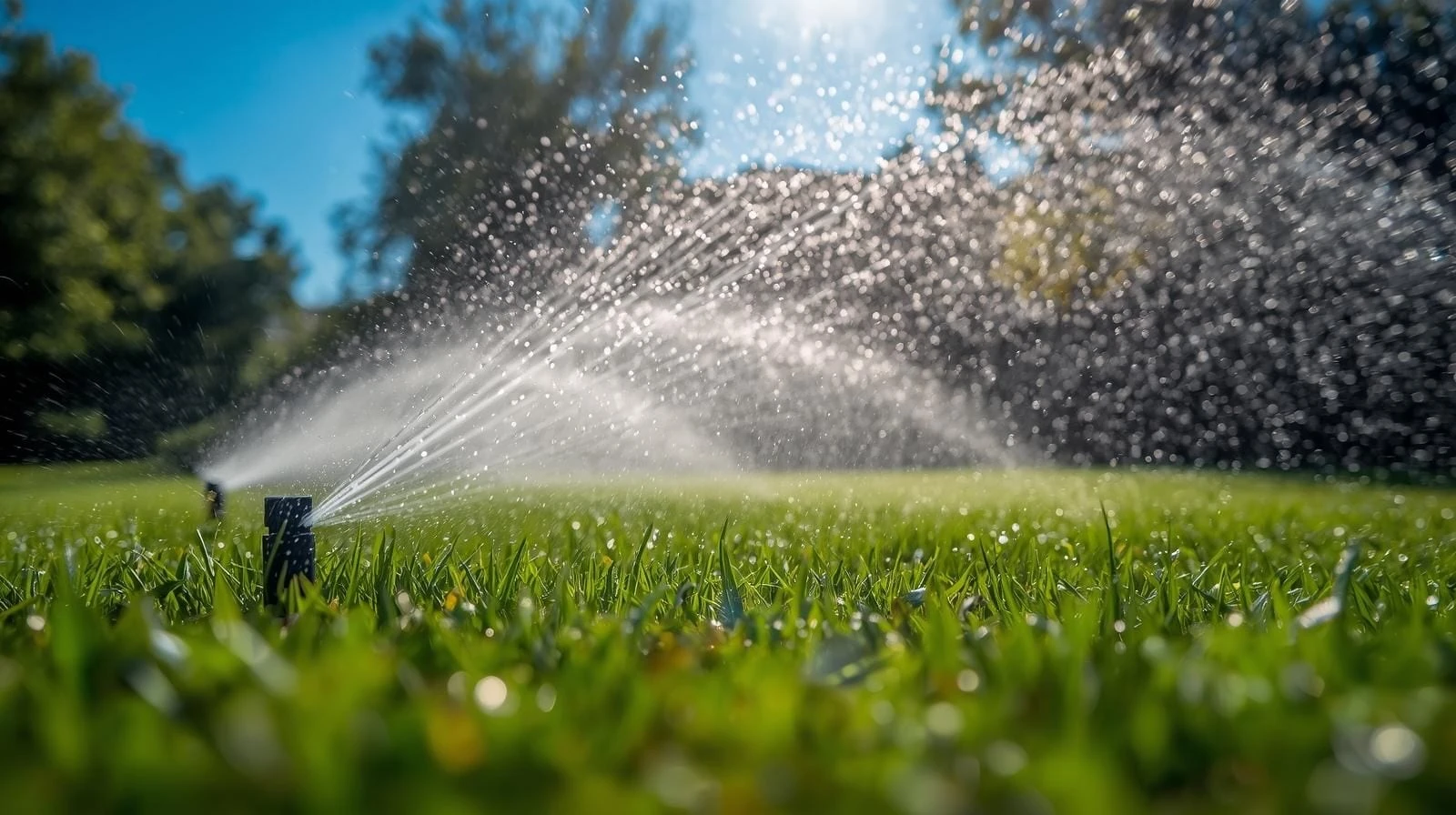
Once the system is live, early-morning watering still wins. Deep, less frequent cycles support the root depth that survives July heat especially when paired with a steady fertilization schedule so grass is not starving while you dial in run times.
What good coverage means for the rest of your program
Uneven irrigation shows up as stripey green and yellow patterns, weeds in the wettest pockets, and fungus prompts where leaf wetness sits too long. After startup, adjusting heads for arc, distance, and overlap means your fertilizer investment is not concentrated only where the sprinkler happens to hit hardest.
If soil is tight and water still runs off, spring aeration can help infiltration in the same season you lock in irrigation performance two levers that address different parts of the same problem.
Pairing with winterization later in the year
Startup and winterization bookend the season. Many clients bundle peak summer checks or full packages so the system is verified when demand peaks, then blown out cleanly before the first sustained cold. Thinking about both now prevents the October scramble and protects lines you just paid to repair in May.
Ready to schedule
If your goal this spring is predictable color, fewer dry spots, and no guessing when the clock should run, start with a professional startup. Contact Weston Landscape & Design to reserve a visit we will walk your zones with you and translate what we see into a clear plan for water, lawn care, and repairs.