If your lawn keeps turning crispy by August, xeriscaping Colorado style starts to look less like a trend and more like common sense. Done right, xeriscaping means designing your yard to use less water while still looking full, finished, and alive, and this guide covers what that actually looks like in Denver-area landscapes.
What xeriscaping means in colorado
Xeriscaping is low-water landscaping built for places where water is limited and weather can be rough on thirsty plants. It does not mean covering your yard in rock and calling it done. The real idea is simple: use the right plants, the right layout, and the right irrigation so your yard needs less water and less babysitting.
That matters in Colorado because your yard deals with a lot. Intense sun, dry air, windy days, late spring snow, and big temperature swings can all show up in the same week. A landscape that fights those conditions usually looks stressed. A landscape designed for them usually looks better and costs less to keep going.
Why it works so well along the front range
The Front Range has a way of exposing weak landscape plans fast. Clay-heavy soil can hold water too long in one spot, then bake hard in another. Summer afternoons get hot, winter can dry plants out, and watering rules can tighten when conditions get rough.
A west-facing yard in Lakewood can feel cooked by midafternoon in July. Grass in that kind of exposure often struggles unless you pour water into it. Xeriscaping works well here because it matches the site instead of forcing a cool-climate lawn idea into a high-plains climate.
Why so many colorado homeowners are swapping traditional lawns
A well-designed xeriscape yard is easier to live with than a thirsty lawn. That is the big reason so many property owners are making the switch.
Traditional turf has its place, but large lawn areas in dry Colorado conditions can become a constant chore. Brown patches show up. Sprinkler coverage gets uneven. Narrow strips by sidewalks dry out faster than the rest. You end up spending time fixing the same problems over and over instead of enjoying the yard.
The biggest benefits for your yard and budget
The first benefit is lower water use, and that usually means lower irrigation costs. But day to day, the bigger win is often less hassle. You spend less time adjusting sprinkler heads, reseeding stressed areas, and wondering why one corner is mud while another looks fried.
Xeriscaping also gives your yard more structure. Instead of one large surface that has to stay uniformly green, you get planted beds, hardscape, texture, and seasonal color. That kind of layout tends to age better, especially in front yards where curb appeal matters.
The environmental perks without the preaching
Using less water is good for obvious reasons, but the practical upside is just as nice. Healthier plant choices usually mean healthier soil, fewer bare spots, and better performance through dry spells.
Flowering perennials and shrubs can also bring in pollinators, which makes the yard feel more alive. Not in a lofty, save-the-world way. In a real, everyday way, where your landscape feels active instead of static.
The core elements of a good xeriscape design
Good xeriscaping is a system. Think of it like setting up a kitchen so the tools, storage, and work zones actually make sense. Plants, irrigation, hardscape, soil, and mulch all need to work together or the yard ends up feeling random.
Water-zone planning
Water-zone planning, often called hydrozoning, means grouping plants with similar water needs together. A lower-water bed should not share the same schedule as a thirstier planting near the patio.
This keeps you from overwatering some plants just to keep others alive. It also makes irrigation simpler because each zone has a clear purpose. Less guessing, fewer soggy roots, fewer dry edges.
Smart turf reduction
Xeriscaping does not require removing every blade of grass. If you want turf for pets, play, or a clean patch of green near a seating area, keep it where it earns its space.
The trick is cutting lawn from areas where it performs badly, like hell strips, steep slopes, or awkward side yards. Shrinking turf strategically usually works better than ripping everything out at once.
Hardscape that does real work
Patios, paths, edging, boulders, gravel, and dry creek beds are not just decorative extras. In Colorado yards, hardscape can solve real problems, especially on slopes or in places where runoff cuts through the yard after a sudden storm.
A path reduces wear in high-traffic areas. Gravel and edging define beds clearly. A dry creek bed can guide water away from trouble spots while looking intentional instead of improvised.
Mulch, soil, and drainage
Mulch helps hold moisture, keeps roots cooler, and cuts down on weeds. Soil amendments improve how soil drains or holds water, depending on what your site needs. Drainage simply means water moves through the yard the way it should, instead of pooling near plants or racing downhill.
These parts are not flashy, but they make the pretty parts work.
Best plants for xeriscaping in colorado
Plant choice is where a lot of xeriscape projects succeed or fail. The best-looking plant at the garden center is not always the best plant for your yard. Sun exposure, soil type, and mature size matter more than impulse.
Low-water perennials and ornamental grasses
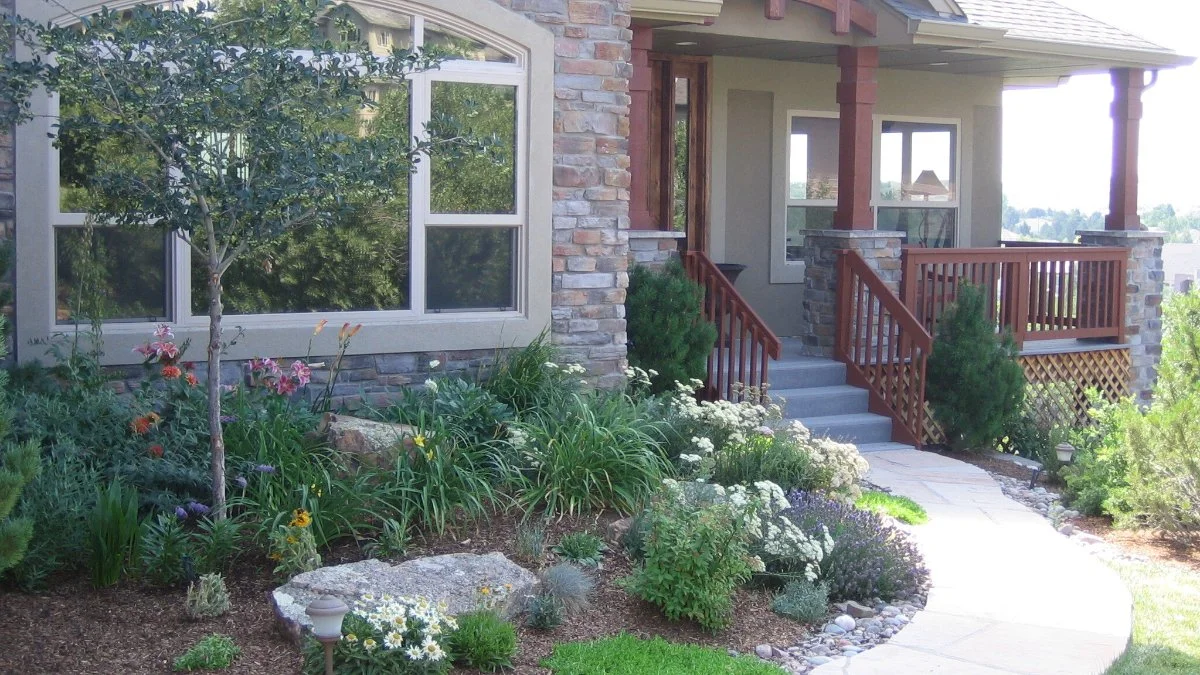
Colorado xeriscapes often use perennials like salvia, yarrow, penstemon, and catmint because they bring long bloom time and reliable color. Ornamental grasses such as blue oat grass and feather reed grass add texture, movement, and winter interest.
That mix matters. Flowers carry the show in spring and summer, while grasses keep the yard from going flat once bloom season fades.
Shrubs and small evergreens for structure
Shrubs and small evergreens give a xeriscape yard shape all year. Without them, the landscape can feel thin in winter, especially after perennials die back.
Junipers, dwarf pines, and hardy flowering shrubs can anchor beds and frame entries. Structure is what keeps a low-water yard from looking temporary.
Native and climate-adapted plant choices
Native plants naturally occur in the region. Climate-adapted plants come from elsewhere but handle Colorado conditions well. Both can be smart choices.
The point is not chasing a label. The point is choosing plants that can handle dry air, strong sun, and temperature swings without constant rescue.
How to xeriscape your yard without starting from scratch
You do not need a full-yard renovation to get the benefits of xeriscaping. In fact, phased projects are often easier on your budget and a lot less disruptive.
Start with the toughest spots first
Begin where your yard already struggles. Burned-out lawn strips, narrow side yards, slopes, dead sprinkler zones, and sidewalk edges are usually the best candidates.
These areas tend to give quick visual payoff because they already look tired. Fixing the worst spot first makes the whole yard feel more intentional.
Remove lawn in phases
Lawn removal can happen through sod cutting, sheet mulching, or professional removal, depending on the area and timeline. Doing it in phases keeps the project manageable.
One section this season is often better than an oversized plan that stalls halfway through. You get progress, not chaos.
Upgrade irrigation as you go
Drip irrigation is often the best match for planting beds because it delivers water at the root zone instead of spraying pavement, gravel, or fences. Efficient sprinkler heads can improve lawn zones that stay.
The catch is simple: irrigation has to match what is planted there. A beautiful low-water bed on an old spray schedule will still waste water.
Common xeriscaping mistakes to avoid
Most xeriscape disappointments come from design shortcuts, not the concept itself.
Too much rock, not enough plants
An all-rock yard can trap heat, feel stark, and still grow weeds. Rock has a place, but it should support the planting, not replace it.
The best xeriscapes balance hardscape, mulch, and living plants so the yard looks cooler, softer, and more finished.
Picking plants without matching sun and soil
Plant failure is usually a placement problem. Full sun, reflected heat off a wall, and heavy soil each create different growing conditions.
If a plant needs regular moisture or cooler roots, a blazing south-facing bed is the wrong home for it. That is not bad luck. That is a mismatch.
Forgetting about mature size and seasonal interest
Tiny nursery plants can make any layout look roomy. Give them a couple of seasons and suddenly everything crowds together.
A good plan accounts for mature size and for what the yard looks like across all four seasons. Spring flowers are great, but winter shape matters too.
What maintenance looks like after installation
Xeriscaping is lower maintenance, not no maintenance. That difference matters because realistic expectations lead to better results.
Watering in the first year
New plants need establishment watering while roots grow deeper. Even drought-tolerant plants need more attention at the beginning than later on.
During the first year, expect to check moisture regularly and adjust based on heat, soil, and plant size. After that, the landscape usually gets much easier.
Seasonal cleanup, pruning, and weed control
You will still need to refresh mulch, trim perennials, inspect drip lines, and stay ahead of weeds. But the routine is usually lighter than caring for a large traditional lawn.
It feels more like tending a designed space than constantly repairing one.
Is xeriscaping right for your colorado property?
For many Denver-area properties, yes. But the right version depends on how you use the space and how much upkeep you want.
When a full xeriscape makes sense
A full xeriscape redesign makes sense when lawn failure is chronic, water bills keep climbing, or the yard needs a fresh plan anyway. It can also be a smart move for commercial properties or common areas that need a cleaner look without constant irrigation stress.
If your current landscape feels like a project that never ends, a bigger reset is often the better answer.
When a hybrid yard is the better fit
A hybrid yard mixes targeted turf with low-water planting beds and hardscape. For active families, pets, or multi-use outdoor spaces, that setup often works best.
You do not have to choose between all lawn and all xeriscape. Most successful Colorado yards land somewhere in the middle.
Simple first steps you can try this season
Start with one area that always gives you trouble, maybe a narrow lawn strip by the sidewalk or a hot patch near the driveway, and convert just that zone. Or regroup plants by water needs and adjust irrigation so the right areas get the right amount.
That one change is usually enough to show what xeriscaping Colorado landscapes get right: less fighting with the yard, more enjoying it.
- Disclaimer: This article is for general informational purposes only. It is not professional advice, a quote, or a service agreement. Conditions at your home or property may differ; contact a qualified professional for an on-site evaluation before making repair, safety, or spending decisions.
Disclaimer: This article is for general informational purposes only. It is not professional advice, a quote, or a service agreement. Conditions at your home or property may differ; contact a qualified professional for an on-site evaluation before making repair, safety, or spending decisions.